Yahuah's Farm
Babaco Papaya
Babaco Papaya
Couldn't load pickup availability
Babaco Papaya
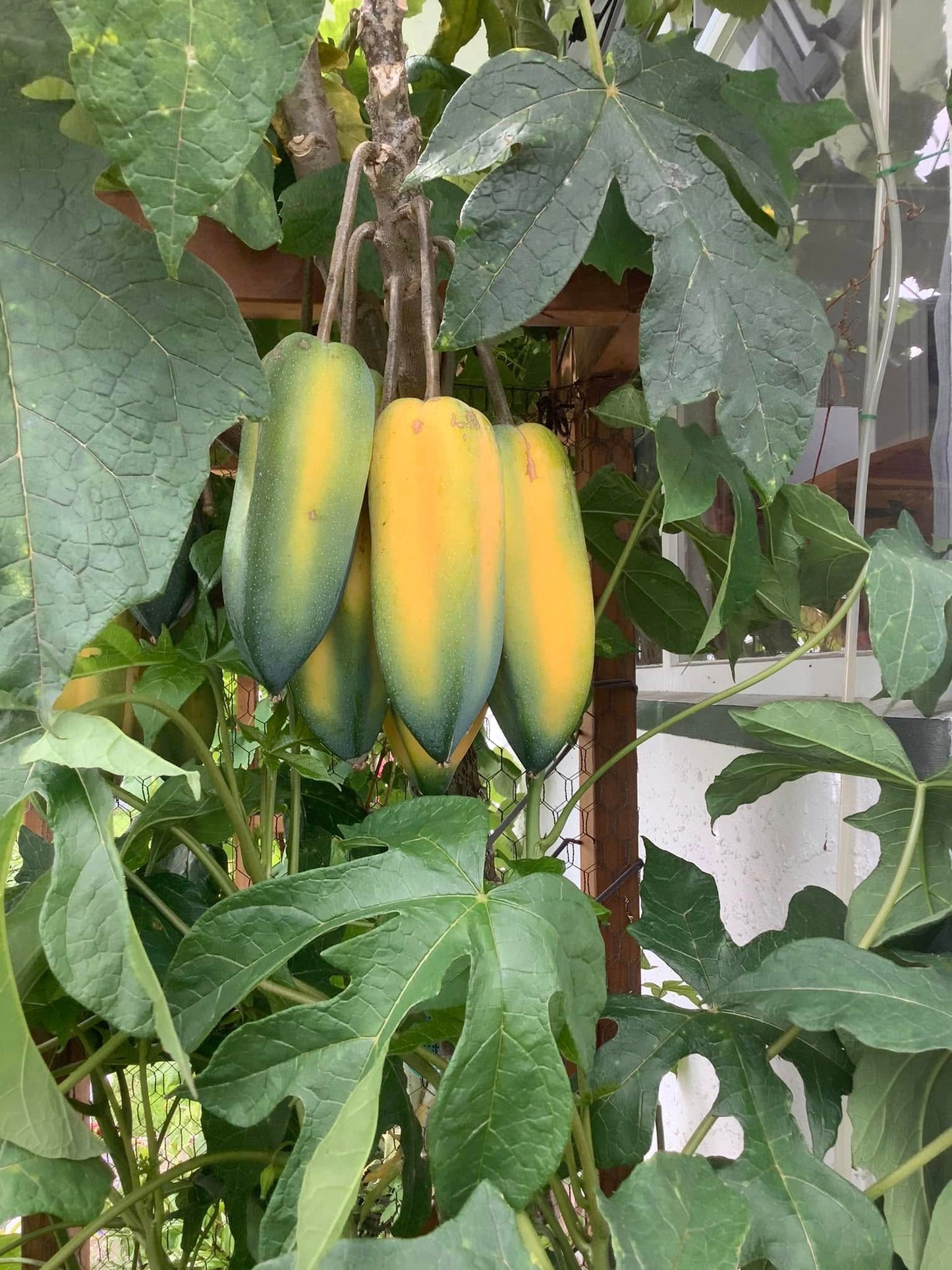
Babaco Papaya, also called Mountain Papaya or Champagne Fruit, is a rare and unusual fruiting plant related to papaya. It has a tropical look with large leaves and a soft green trunk, but it is more cool-tolerant than regular papaya. This makes it a very exciting plant for growers who want something tropical-looking, productive, and different.
Babaco is not the same as the common grocery-store papaya. It is usually listed botanically as Vasconcellea × heilbornii and is known for producing long, yellow, seedless fruit with a unique flavor often described as a mix of papaya, pineapple, strawberry, kiwi, and citrus. The fruit is smooth-skinned, aromatic, juicy, and can often be eaten fresh, juiced, blended, cooked, or used in desserts, sauces, smoothies, jams, and preserves.
One of the most exciting things about Babaco is that the fruit is usually seedless. It can set fruit without needing pollination, which makes it a valuable container fruiting plant for greenhouses, patios, and protected growing spaces. The fruit grows along the trunk and can become long and five-sided, giving it a very unique look compared to regular papaya.
Babaco is a wonderful plant for homesteads, greenhouse growers, collectors, tropical fruit lovers, and anyone wanting to grow something rare and useful. It is beautiful enough to grow as an ornamental and valuable enough to grow as a food-producing plant.
Edible Uses
Babaco fruit is edible and seedless. The fruit is usually eaten when it turns yellow and gives slightly to pressure. The skin is smooth and thin, and many people use the whole fruit depending on preference.
The flavor is bright, tangy, tropical, and refreshing. It can be eaten fresh, sliced into fruit salads, blended into smoothies, juiced, cooked down into sauces, made into jams, added to desserts, or used in drinks. Because it has a bright acidic flavor, it works well in both sweet and tangy recipes.
Babaco is also known to contain papaya-like enzymes, which is one reason fruit in this family has traditionally been valued for digestion and food preparation.
How Your Plant Will Arrive
Your Babaco Papaya may be shipped as a young plant, rooted cutting, bare-root plant, or dry-root plant depending on the season and shipping method. After traveling through the mail, it may look tired, wilted, dry, small, or stressed. This is normal for shipped plants.
If it arrives as a bare-root or dry-root plant, it may not look like a full green potted plant. Even if it looks like only a rooted stem or root section, it is alive and needs to be planted. The life of the plant is in the stem and root system, and with proper care it can recover and begin growing.
When your plant arrives, open the package right away. If the roots feel dry, soak only the roots in clean water for about 30 minutes to 1 hour before planting. Do not soak the whole plant for days. The goal is only to rehydrate the roots before planting.
Until planted, keep the roots moist and keep the plant out of direct sun, strong wind, and extreme heat. Shipped plants should not be placed straight into hot afternoon sun when they first arrive.
If you cannot plant the same day, keep the roots wrapped in slightly damp paper towel, damp peat, or damp soil and place the plant somewhere cool, shaded, and protected for a short time. Plant as soon as possible for the best chance of success.
First Care After Shipping
After planting, keep your Babaco Papaya in shade, bright indirect light, or gentle morning sun for the first few days. Do not place a newly shipped or stressed plant straight into harsh afternoon sun. It needs time to recover from shipping and adjust to its new location.
Keep the soil lightly moist while the plant settles in, but do not keep it soggy. Babaco likes moisture, but it needs good drainage. Wet, heavy soil can damage the roots and stem.
Do not fertilize heavily right away. Let the plant settle and begin growing first. Once new growth appears, compost or a gentle natural fertilizer can be used.
After the plant begins to perk up and show new growth, gradually increase sunlight until it is growing in its permanent location.
Planting Instructions
Plant Babaco Papaya in rich, loose, well-draining soil. It likes moisture, fertility, and warmth, but it does not like sitting in wet, soggy ground. Good drainage is very important.
If growing in a container, use a pot with drainage holes and a high-quality potting mix with added compost. A large container is best because Babaco can grow several feet tall and needs room for its roots. Many growers keep Babaco in a large pot so it can be moved into protection during cold weather.
Plant at the same depth it was previously growing. Do not bury the stem too deep. Gently firm the soil around the roots and water lightly after planting.
Babaco grows best in full sun to part sun. In very hot climates, morning sun with afternoon shade can help protect the plant from stress. In a greenhouse, give it bright light and good airflow.
Long-Term Care
Babaco Papaya grows best in warm, protected conditions with rich soil, steady moisture, and good drainage. It does not like drought, but it also does not like wet feet. Keep the soil evenly moist during active growth, allowing excess water to drain away.
Feed during the growing season with compost, worm castings, or a balanced natural fertilizer. Babaco is a fruiting plant and will appreciate steady nutrition once actively growing.
This plant can grow well in a greenhouse, high tunnel, sunroom, patio container, or protected outdoor location during warm months. In colder climates, container growing is usually the best choice so the plant can be moved before freezing weather arrives.
Remove dead or damaged leaves as needed. If the plant becomes tall and top-heavy, it may need support. Avoid damaging the soft trunk.
Cold Hardiness
Babaco is more cool-tolerant than regular papaya, but it is still not a true cold-hardy outdoor fruit tree for Zone 7 winters. It is often listed for warm climates and protected growing, with some sources noting it can tolerate brief temperatures down near the upper 20s. However, hard freezes, wet cold soil, and extended winter weather can damage or kill the plant.
In Zone 7, Babaco should be treated as a container plant, greenhouse plant, or protected tropical. It can be grown outside during the warm season and moved into a greenhouse, sunroom, high tunnel, or protected indoor space before freezing weather.
If grown indoors or in a greenhouse during winter, give it the brightest light possible and reduce watering slightly if growth slows. Keep the soil lightly moist, not soggy.
Harvesting
Babaco fruit is usually harvested when it turns from green to yellow and begins to soften slightly. The fruit is seedless, juicy, and fragrant. It can be eaten fresh or used in drinks, desserts, sauces, smoothies, jams, and preserves.
Because Babaco can set seedless fruit without needing another plant for pollination, it is a great option for container growers and greenhouse fruit production.
Best Uses
Babaco Papaya is excellent for greenhouse growing, container growing, patios, sunrooms, tropical fruit collections, edible landscaping in warm climates, and homestead food production. It is both beautiful and useful, giving the look of a tropical papaya with the bonus of rare seedless fruit.
This is a great plant for anyone who wants something different, productive, and exciting to grow.
Care Summary
Plant in rich, well-draining soil. Protect from harsh direct sun for the first few days after shipping. Keep lightly moist while establishing, but do not overwater. Remember, even if it arrives looking like only a rooted stem or root section, it is alive and needs to be planted. Grow in full sun to part sun with warmth, moisture, and good drainage. In Zone 7 and colder areas, grow Babaco as a container or greenhouse plant and protect it from freezing weather.
Share