Yahuah's Farm
EASTERN REDBUD TREES
EASTERN REDBUD TREES
Couldn't load pickup availability
Eastern Redbud (Cercis canadensis)
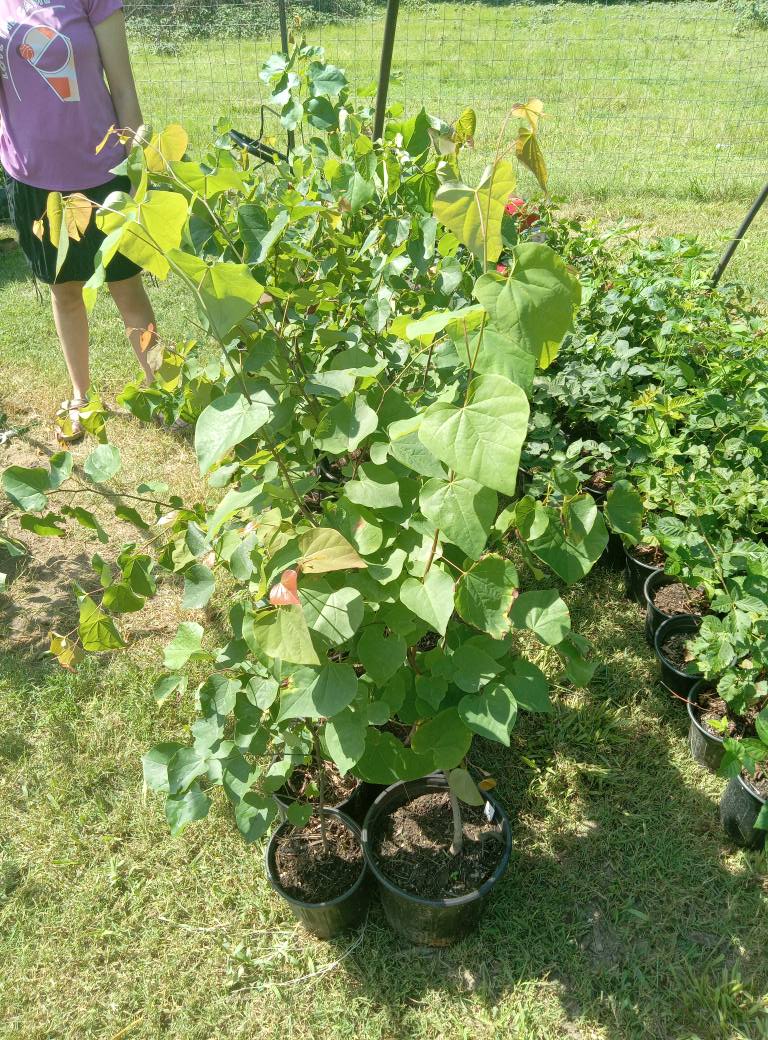
A beloved native understory tree, Eastern redbud dazzles spring landscapes with rosy‑pink blossoms that emerge on bare branches before the heart‑shaped leaves unfurl. Growing 20–30 feet tall with a similar spread, it thrives in USDA Zones 4–9—an ideal choice for Arkansas gardens, woodland edges, and pollinator‑friendly plantings.
Growth Habit & Seasonal Interest
-
Spring Bloom: Clusters of pea‑like, pink to magenta flowers cover the limbs in March–April, feeding early bees and garnishing landscapes.
-
Foliage & Form: Leaves open heart‑shaped and bronze, maturing to bright green; in autumn they often take on golden‑yellow hues. A naturally vase‑shaped canopy and gnarled branches add winter interest.
-
Pods & Wildlife: By mid‑summer, flattened seed pods form and persist into fall, offering food for songbirds and small mammals.
Site Preferences
-
Light: Performs best in full sun to partial shade; too deep shade reduces flowering.
-
Soil: Prefers rich, well‑drained loam but adapts to clay or sandy soils with good drainage; pH 6.0–7.5.
-
Moisture: Establish with consistent moisture; once mature, tolerates short dry spells but fruits and flowers most prolifically when the soil remains evenly moist.
Pests & Diseases (Organic Management)
-
Canker & Verticillium Wilt: Choose disease‑resistant cultivars; remove and destroy infected branches promptly.
-
Aphids & Scale: Encourage ladybugs and lacewings by planting nectar‑rich companions (yarrow, dill). Spray with insecticidal soap or neem oil at first sight.
-
Leaf Spot: Rake and compost fallen leaves to reduce fungal spores; ensure good air circulation by thinning crowded branches.
Benefits in the Garden
-
Early Pollinator Support: Spring flowers provide nectar and pollen when few other plants are in bloom, feeding native bees, honeybees, and hummingbirds.
-
Soil Enrichment: As a member of the pea family, redbud forms a mild symbiosis with nitrogen‑fixing bacteria, slowly improving soil fertility for itself and neighbors.
-
Wildlife Habitat: Dense branches and summer pods offer shelter and food for songbirds, chipmunks, and butterflies.
-
Understory Versatility: Thrives in partial shade, bringing vertical interest without outcompeting shade‑loving perennials.
-
Ornamental Value: Multi‑season beauty with rosy blooms, heart‑shaped leaves, and golden fall color, plus sculptural winter form.
-
Erosion Control: Fibrous roots stabilize sloped soils and reduce runoff.
-
Low Maintenance: Requires minimal pruning and thrives with compost mulch and routine water—no synthetic inputs needed.
How to Grow Redbud Trees
-
Site Preparation: Dig holes twice the diameter of the root ball; blend native soil with well‑rotted compost to enrich microbial life.
-
Planting: Position bare‑root or container trees so the root flare sits at soil level; backfill gently with the soil‑compost mix, firming to eliminate air pockets.
-
Mulching: Spread a 2–3‑inch layer of organic mulch (shredded bark or leaf mold) from the trunk out to the drip line—keep mulch pulled an inch away from the trunk.
-
Watering: Water deeply twice weekly during the first growing season, allowing the top few inches to dry between waterings; thereafter, water only during extended droughts.
-
Soil Building: Top‑dress annually with compost beneath the canopy; apply homemade compost tea in early spring to support root health and flowering.
-
Pruning & Maintenance: In late winter, remove dead or crossing limbs to maintain structure; cut out any suckers at their base.
-
Pollination & Propagation: Self‑fertile but benefits from nearby redbuds; propagate via softwood cuttings in summer or cold‑stratified seed in spring.
By following these organic-minded guidelines—compost enrichment, mulch, balanced watering, and habitat encouragement—you’ll enjoy vibrant spring blossoms and a resilient redbud that enhances both your garden’s beauty and its ecosystem.
Share