Yahuah's Farm
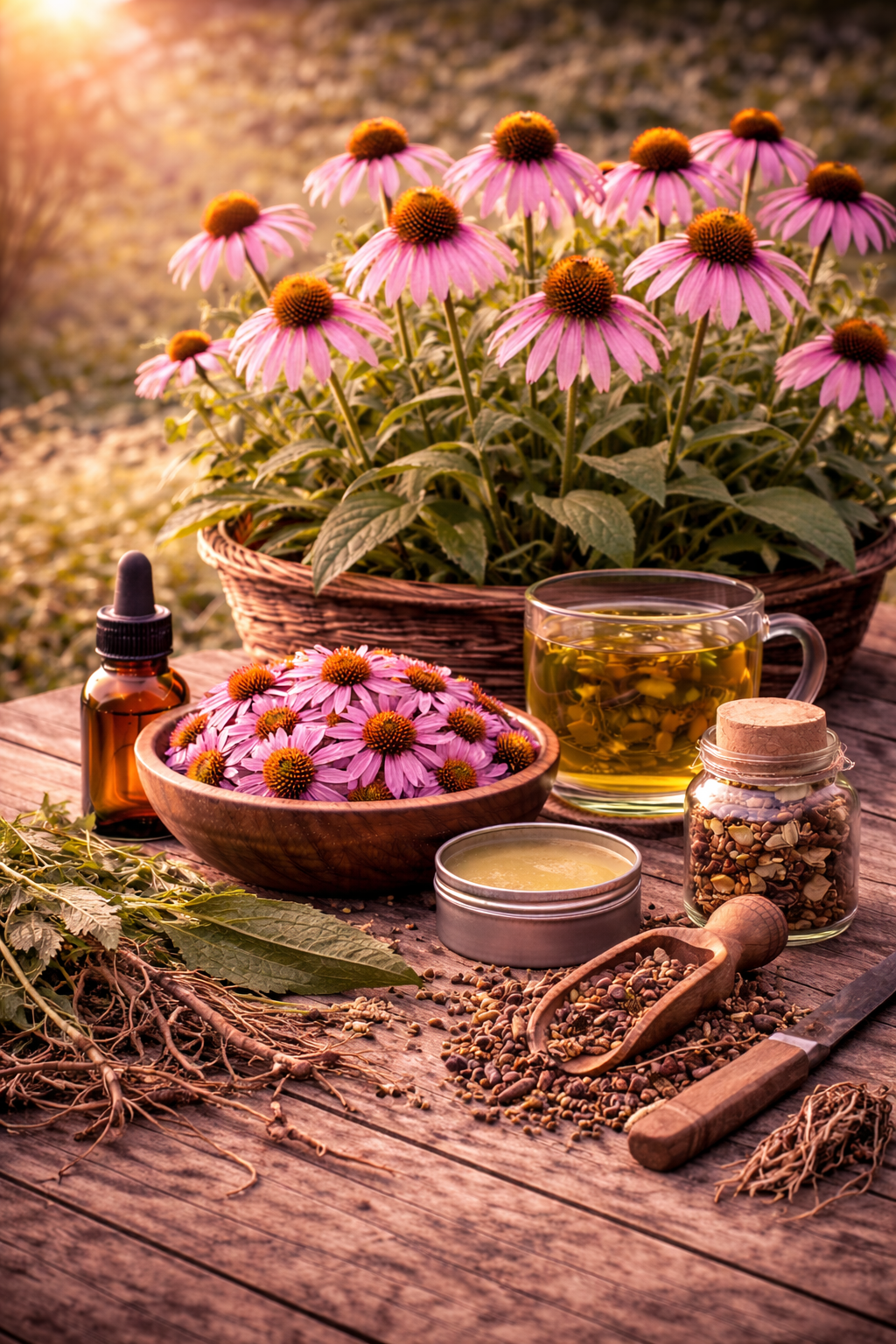
Echinacea purpurea
Echinacea purpurea
Couldn't load pickup availability
🌸 Echinacea (Echinacea purpurea) — Organic Seeds
Common Names: Purple Coneflower, Eastern Purple Coneflower
🌱 Seed Quality Promise
All seeds sold by Yahuah’s Farm are 100% organic, non-GMO, and never chemically treated or coated.
We do not sell pelleted, dyed, chemically enhanced, or synthetic-treated seeds.
What you plant should be as pure as the medicine it becomes.
About Echinacea purpurea
Echinacea purpurea is the most widely grown and recognizable species of echinacea, known for its large purple-pink flowers, tall stems, and vigorous growth. Native to the eastern and central United States, this species is beloved for both its medicinal value and ornamental beauty.
Unlike Echinacea angustifolia, which focuses much of its energy into a deep taproot, E. purpurea grows faster, produces larger above-ground growth, and offers abundant flowers and leaves. It is ideal for gardeners who want a high-yield, fast-establishing medicinal plant.
This is a hardy, long-lived perennial that becomes more impressive with each passing year.
Traditional & Herbal Uses
Echinacea purpurea has been traditionally used as:
• A classic immune-supporting herb
• A foundational cold-season plant
• A traditional wellness tonic
• A lymph-supporting botanical
• A whole-plant medicine
• A daily-use herbal ally
• A strengthening herb
• A long-term garden medicine
The root, leaves, and flowers are all traditionally used.
Plant Characteristics
Botanical Name: Echinacea purpurea
Life Cycle: Perennial
Growth Habit: Upright, clumping
Mature Height: 2–4 feet
Mature Width: 18–24 inches
Flower Color: Purple-pink with orange-brown cone
Bloom Time: Early summer through fall
Root Type: Fibrous with crown rhizomes
Attracts: Bees, butterflies, beneficial insects
This species is taller and more floriferous than E. angustifolia.
Growing Echinacea purpurea from Seed
This species is easier and faster to grow than many other echinaceas, but still benefits from cold stratification.
How to Germinate Echinacea purpurea Seeds
Cold Stratification Recommended
For best germination, expose seeds to cold.
Method 1: Natural Stratification (Best)
-
Sow seeds outdoors in fall.
-
Press lightly into soil surface.
-
Do not bury deeply.
-
Allow winter cold to naturally stratify seeds.
-
Germination occurs in spring.
Method 2: Indoor Stratification
-
Place seeds in a moist medium.
-
Refrigerate for 3–4 weeks.
-
Surface sow after chilling.
-
Keep soil moist and cool.
Light Requirements
Seeds need light to germinate.
Do not bury.
Germination Time
• 10–21 days after stratification
• May be staggered
Ideal Growing Conditions
USDA Zones
Zones 3–9
Sun
• Full sun preferred
• Tolerates light shade
Soil
• Well-draining
• Loamy or sandy
• Moderate fertility
Avoid soggy or compacted soils.
Water
• Moderate
• Drought tolerant once established
Spacing
• Space plants 18–24 inches apart
• Allows for clumping growth
Growth Timeline
Year 1:
• Leaf rosette
• Root establishment
Year 2:
• Flowering begins
Years 3+:
• Heavy flowering
• Full medicinal maturity
Harvesting
Roots
Traditionally harvested after 3–4 years.
• Dig carefully
• Wash thoroughly
• Slice and dry
Leaves & Flowers
Can be harvested yearly once established.
Seed Saving
-
Allow flower heads to fully dry.
-
Cut and dry further.
-
Rub heads to release seeds.
-
Store cool, dark, and dry.
Why Grow Echinacea purpurea?
• Fast-growing medicinal perennial
• Beautiful ornamental plant
• Long-lived
• Pollinator friendly
• Easy to grow
• Whole-plant medicine
• Hardy and resilient
• High-yield harvests
• Perfect for home apothecaries
Share