Yahuah's Farm
Kentucky Coffee Tree
Kentucky Coffee Tree
Couldn't load pickup availability
Kentucky Coffee Tree
Kentucky Coffee Tree is a strong, long-lived native tree known for its bold appearance, large compound leaves, thick branching structure, wildlife value, hard wood, and unique seed pods. This is a beautiful and useful tree for homesteads, farms, native landscapes, wildlife plantings, shade, windbreaks, and long-term legacy tree plantings.
This tree has a very different look compared to many common shade trees. It has large divided leaves that give it a tropical appearance during the growing season, yet it is very cold hardy and tough once established. In winter, the tree has a rugged, open branching structure that gives it a bold and strong appearance.
Kentucky Coffee Tree is not a fast little garden plant. It is a long-term tree that can live for generations when planted in the right location. It is especially valuable for those wanting native trees that provide shade, beauty, wildlife value, strong wood, and historical usefulness.
Homestead and Practical Uses
Kentucky Coffee Tree offers many uses around the farm, homestead, and landscape.
It can be grown for shade, native landscaping, wildlife habitat, windbreaks, long-term timber value, erosion control, soil stabilization, livestock shade, large-yard planting, legacy tree planting, and natural landscape beauty.
The wood is hard, strong, and durable. Historically, Kentucky Coffee Tree wood has been used for fence posts, rails, furniture, cabinetry, and other practical wood uses. It is not usually planted for quick production, but as a long-term tree it can become very valuable.
This tree is also useful in open areas because it has a strong structure and can handle tough conditions once established. It can tolerate drought, cold, heat, and a range of soil types after it has had time to root in.
Wildlife and Landscape Value
Kentucky Coffee Tree can provide shade, shelter, nesting structure, and habitat value. Its large leaves cast a light, filtered shade, which can be useful in landscapes where you want shade without creating an extremely dense canopy.
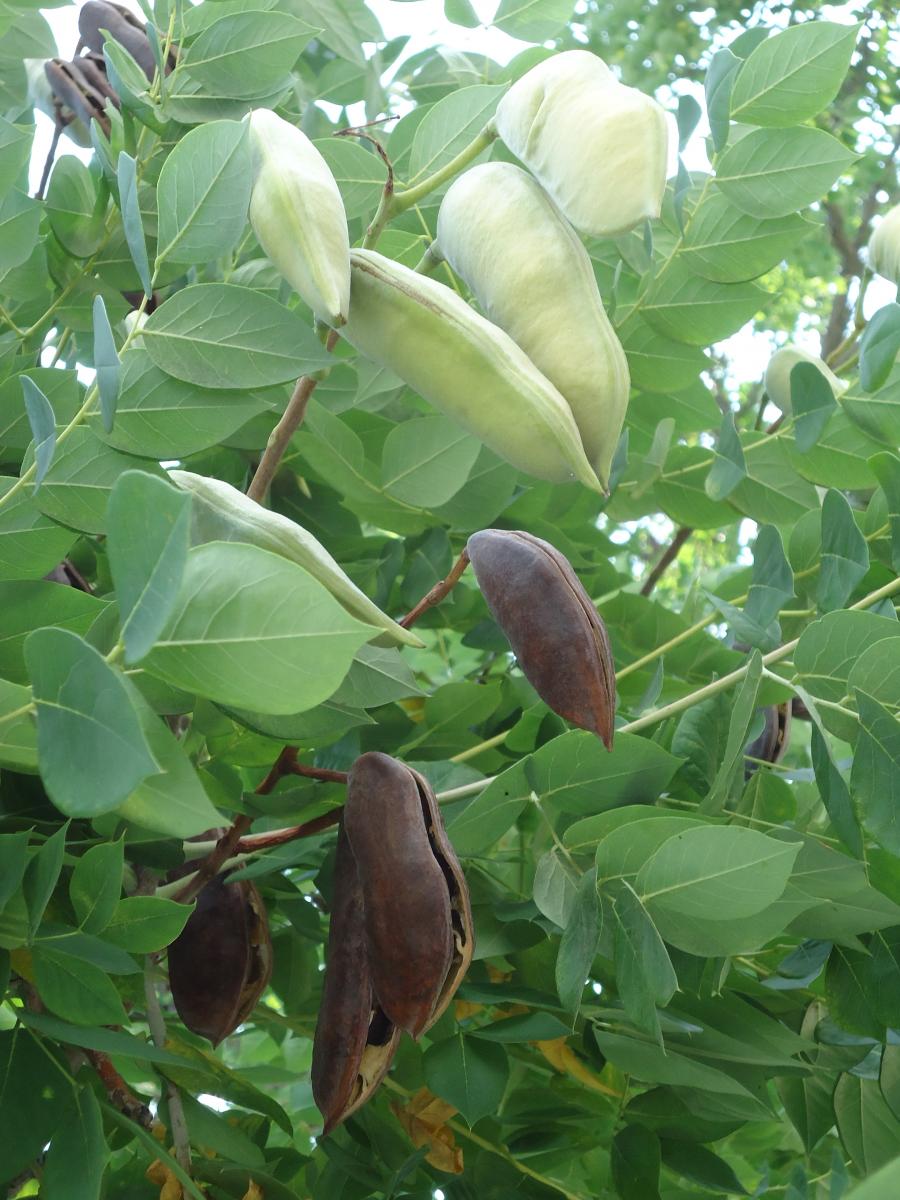
The seed pods are unique and ornamental, hanging on the tree and adding winter interest. Wildlife may interact with the pods and tree structure, though the raw seeds are not considered a casual wildlife or human food.
The tree is also valuable as a native landscape tree because it is tough, uncommon, and visually striking. It can become a conversation piece in the landscape while also serving a practical purpose.
Important Safety Note About Seeds and Pods
Kentucky Coffee Tree produces hard seeds inside large pods. These seeds are not edible raw. Raw seeds and pods contain compounds that can be toxic if eaten by people, pets, or livestock.
Historically, the seeds were roasted and used as a coffee-like drink substitute, which is where the tree gets its name. However, raw seeds should never be eaten. If the seeds are used at all, they must be properly roasted, and even then, they are used as a historical coffee substitute rather than a true food crop.
At Yahuah’s Farm, we value Kentucky Coffee Tree mainly as a native shade tree, homestead tree, wildlife and landscape tree, useful wood tree, and long-term legacy planting. It should not be treated as a casual edible plant.
Historical Seed Use
Kentucky Coffee Tree got its name because the seeds were historically roasted and used as a coffee substitute. The seeds were collected from mature pods, removed, roasted thoroughly, and then ground to make a dark coffee-like drink.
This was a historical survival and pioneer use, not something to treat casually. The seeds must never be eaten raw, and the pods should be kept away from children and animals that may chew or swallow them.
For most homesteads, the greatest value of this tree is not the seed as food, but the tree itself: shade, strength, beauty, native value, useful wood, and long-term resilience.
How Your Tree Will Arrive
Your Kentucky Coffee Tree may be shipped as a young tree, rooted seedling, bare-root tree, or dry-root tree depending on the season and shipping method. After traveling through the mail, it may look tired, wilted, trimmed back, dormant, or smaller than expected. This is normal for shipped trees.
If it arrives as a bare-root or dry-root tree, it may not look like a full green potted tree. Even if it looks like only a stem and roots, it is alive and needs to be planted. The life of the tree is in the roots, stem, and buds, and with proper care it can recover and begin growing.
When your Kentucky Coffee Tree arrives, open the package right away. If the roots feel dry, soak only the roots in clean water for about 1 to 3 hours before planting. Do not soak the whole tree for days. The goal is only to rehydrate the roots before planting.
Until planted, keep the roots moist and keep the tree out of direct sun, strong wind, and extreme heat. Shipped trees should not be placed straight into hot afternoon sun when they first arrive.
If you cannot plant the same day, keep the roots wrapped in slightly damp paper towel, damp peat, or damp soil and place the tree somewhere cool, shaded, and protected for a short time. Plant as soon as possible for the best chance of success.
First Care After Shipping
After planting, protect your Kentucky Coffee Tree from harsh direct sun, drying wind, and extreme heat for the first few days if possible. A newly shipped tree needs time to adjust after being in a box.
Keep the soil evenly moist while the tree establishes. Do not let the roots dry out during the first growing season. At the same time, do not keep the tree sitting in standing water.
Do not fertilize heavily right away. Let the roots settle first. Once new growth appears and the tree is actively growing, compost or a gentle natural fertilizer can be used if needed.
If leaves wilt, dry, or drop after shipping, do not panic. This can happen with shipped trees. Keep caring for the roots and stem. If the stem and buds are alive, the tree may push new growth when conditions are right.
Planting Instructions
Plant Kentucky Coffee Tree in full sun for the strongest growth and best tree form. It can tolerate some part sun when young, but full sun is best for long-term health.
Choose the planting location carefully. Kentucky Coffee Tree can become a large tree and needs room to grow. Do not plant too close to buildings, septic systems, water lines, sidewalks, driveways, or power lines. This is a long-term tree that should be given space.
Kentucky Coffee Tree can grow in many soil types, including clay, loam, and average garden soil. It prefers well-draining soil but is tough once established.
Dig a hole wide enough for the roots to spread naturally. Do not force the roots into a tight hole. Place the tree so the root crown is at soil level. Do not bury the trunk too deep. Gently backfill with soil and water deeply after planting.
Mulch around the base of the tree to help hold moisture, reduce weeds, and protect the soil. Keep mulch pulled back a few inches from the trunk so it does not stay wet against the bark.
Long-Term Care
Kentucky Coffee Tree is a hardy, low-maintenance tree once established. During the first few years, water during dry spells to help the roots grow deep and strong. Deep watering is better than frequent shallow watering.
Keep grass and weeds pulled back from the base of the tree, especially while it is young. Mulch helps reduce competition and keeps the root zone protected.
Protect young trees from deer, rabbits, livestock, and mower damage. Tree tubes, cages, fencing, or trunk guards may be helpful, especially in areas with heavy wildlife pressure.
Kentucky Coffee Tree does not need heavy fertilizing. Compost, mulch, and healthy soil are usually better than strong fertilizer. Once established, it is a tough tree that can handle less-than-perfect conditions.
Prune only as needed to remove damaged, crossing, weak, or poorly placed branches. Major pruning is best done during dormancy. Allow the tree to develop a strong central structure while young.
Cold Hardiness
Kentucky Coffee Tree is very cold hardy and grows across a wide range of climates. It is well suited for Zone 7 and can also handle much colder areas.
In winter, the tree goes dormant and drops its leaves. This is normal. The roots, trunk, and buds remain alive, and new growth returns in spring.
Young trees may benefit from mulch around the root zone during their first winter, especially after being newly planted.
Growth and Patience
Kentucky Coffee Tree can be slow to wake up in spring compared to some other trees. Do not assume it is dead too early. This tree may leaf out later than many other species.
Young trees may also spend time building roots before putting on fast top growth. Be patient. Once established, Kentucky Coffee Tree becomes strong, tough, and dependable.
Best Uses
Kentucky Coffee Tree is excellent for homesteads, native landscapes, large yards, farms, wildlife areas, shade plantings, windbreaks, silvopasture edges, long-term timber value, and legacy tree plantings.
It is especially useful for growers who want a strong native tree that can handle tough conditions and become more valuable with age.
Care Summary
Plant in full sun with room to grow. Protect from harsh direct sun and drying wind for the first few days after shipping. Keep roots moist while establishing, but do not keep the soil waterlogged. Remember, even if it arrives looking like only a stem and roots, it is alive and needs to be planted. Mulch around the base, water during dry spells, and protect young trees from deer, rabbits, livestock, and mower damage. Kentucky Coffee Tree is a strong, long-lived native tree that provides shade, beauty, wildlife value, useful wood, historic seed use, and long-term homestead legacy. Raw seeds and pods should not be eaten.
Share