Yahuah's Farm
Moringa Plant – “The Miracle Tree”
Moringa Plant – “The Miracle Tree”
Couldn't load pickup availability
Moringa Plant – “The Miracle Tree”
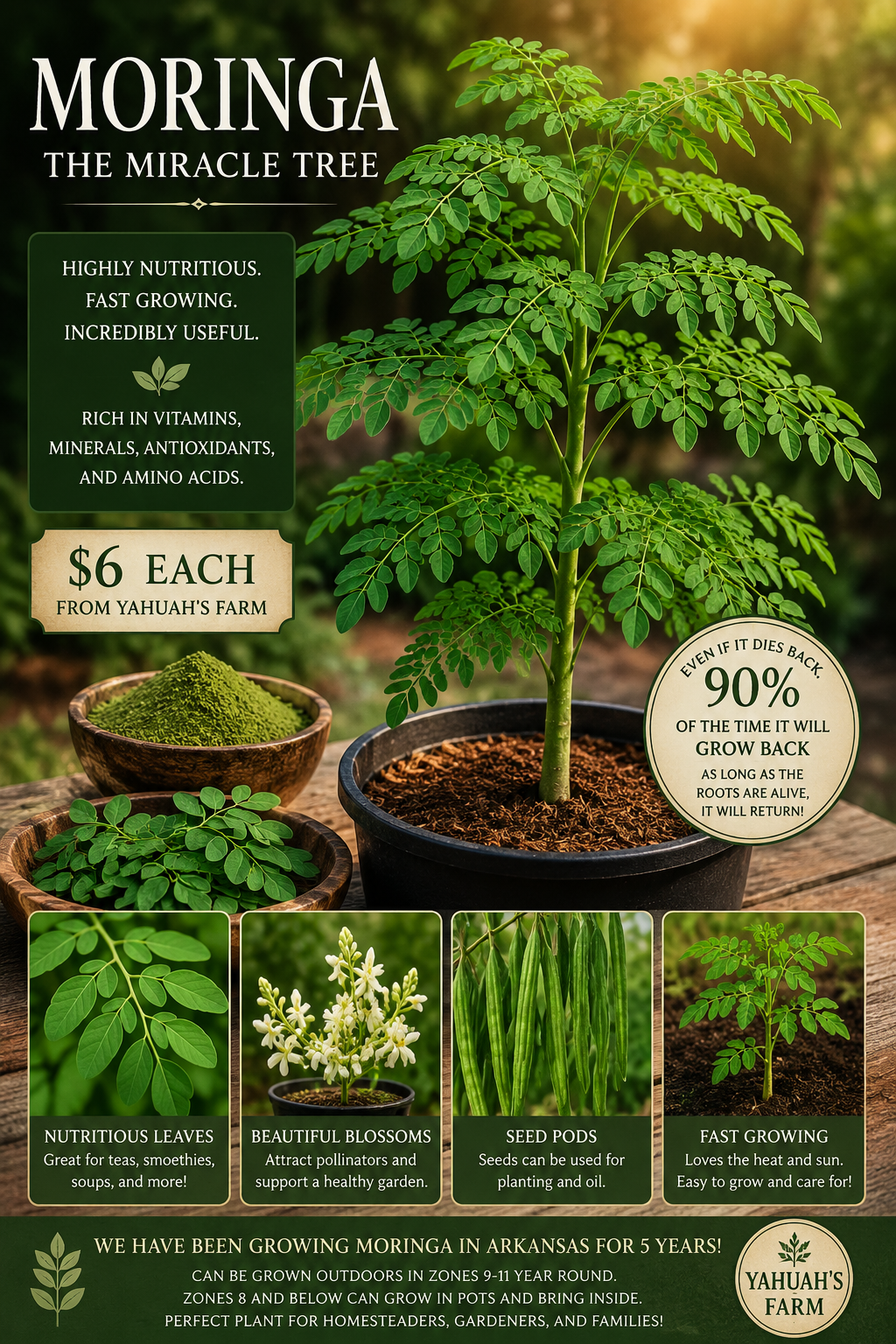
Moringa is one of the most valuable food and medicinal plants a homestead can grow. Often called “The Miracle Tree,” Moringa is known around the world for its highly nutritious leaves, fast growth, drought tolerance, and incredible usefulness. The leaves are commonly dried and powdered, added to teas, smoothies, soups, capsules, livestock feed, and many traditional herbal preparations.
Moringa leaves are rich in vitamins, minerals, antioxidants, amino acids, and plant compounds that have made this tree famous in many cultures. It has been traditionally used to support energy, nourishment, immune health, inflammation response, digestion, healthy blood sugar balance, milk production in nursing mothers, and overall wellness. Every part of the plant has been valued in different cultures, but the leaves are the most commonly used and the easiest for most homesteaders to harvest.
At Yahuah’s Farm, we have been growing Moringa here in Arkansas for five years, and it has proven itself to be one of the most useful plants we grow. Even though Arkansas is not a true tropical climate, Moringa can still be grown very successfully here with the right care.
Growing Zones
Moringa is truly hardy as a perennial tree in USDA Zones 9–11, where winters stay mild and the ground does not freeze hard. In those zones, it can grow into a large tree and come back year after year outdoors.
In Zones 8 and below, including Arkansas Zone 7, Moringa should be treated as a warm-season perennial, container plant, or die-back plant. It will not usually remain evergreen outdoors through winter in colder zones. Frost and freezing temperatures can kill the top growth, but that does not always mean the plant is dead.
Even if Moringa completely dies back above ground, 90% of the time it will return as long as the roots are still alive. The key is protecting the root system. Once warm weather returns, the plant can push new growth from the base or roots.
For colder areas, Moringa can also be grown in a pot and brought inside the home, greenhouse, garage, sunroom, or protected area during winter. This makes it possible for people outside of tropical zones to grow and enjoy this incredible plant.
When Your Moringa Arrives from Shipping
When your Moringa plant arrives, open the package as soon as possible. Plants can get stressed during shipping, especially in heat, cold, or darkness. Some yellowing, wilting, or leaf drop can happen after shipping and does not mean the plant is dead.
Remove the plant carefully from the box and place it in a shaded, protected location for the first few days. Do not put it straight into full sun the day it arrives. Moringa loves heat and sun once established, but after shipping it needs time to adjust.
Keep it in bright shade or morning sun for 3–5 days while it recovers. Water lightly if the soil is dry, but do not soak it heavily. Moringa does not like sitting in wet soil. The roots need moisture, but they also need air.
After a few days of recovery, slowly introduce it to more sun. Start with morning sun first, then gradually move it into stronger light. This helps prevent shock and leaf burn.
How to Plant Moringa
Moringa grows best in warm weather, full sun, and well-draining soil. Wait until all danger of frost has passed before planting outdoors. The soil should be warm, not cold and wet.
Choose a spot with as much sun as possible. Moringa can handle poor soil better than many plants, but it does best in loose, rich, well-drained soil. Avoid heavy clay areas that stay soggy. If your soil holds too much water, plant it in a raised bed, mound, or container.
Dig a hole slightly larger than the root ball. Gently place the plant in the hole at the same depth it was growing in the pot. Do not bury the stem too deep. Backfill with soil and water it in well one time to settle the roots.
After planting, allow the soil to dry slightly between waterings. Moringa likes moisture when actively growing, but it does not like wet feet. Overwatering is one of the easiest ways to hurt the plant.
Container Growing
Moringa does very well in containers, especially in colder zones. A container allows you to move the plant inside before frost. Start with a pot large enough to give the roots room to grow, and make sure it has good drainage holes.
Use a loose, well-draining potting mix. A living soil, compost-based soil, or well-drained garden mix works well. Avoid heavy, compacted soil that stays wet.
Place the pot in full sun outdoors during warm months. Before cold weather arrives, bring it indoors to a sunny window, greenhouse, grow room, sunroom, or protected area. Indoors, it may slow down, lose leaves, or go semi-dormant. That is normal.
When growing indoors, water much less than you would outdoors. The plant will not use as much water inside during winter. Keep the roots alive, but do not keep the soil constantly wet.
Winter Care in Cold Zones
In Zones 8 and below, Moringa needs protection from hard freezes. You can grow it in a pot and bring it inside, or you can plant it outdoors and mulch heavily around the base before winter.
If left outside in cold zones, the top may die back after frost. Once this happens, do not assume the plant is gone. Cut back the dead growth after it has fully died back and protect the root area with mulch. In spring, once the weather warms up, watch for new shoots coming from the base.
The most important thing is keeping the roots from rotting or freezing too hard. Dry, protected roots have a much better chance of returning than roots sitting in cold, wet soil all winter.
Ongoing Care
Moringa is a fast grower in heat. Once established, it can grow very quickly through the summer. It loves sun, warmth, and regular harvesting.
Water deeply when needed, then allow the soil to breathe before watering again. Feed with compost, worm castings, compost tea, or a gentle natural fertilizer during the growing season. Moringa does not need heavy synthetic feeding to grow well, but it responds beautifully to healthy soil.
You can prune Moringa to keep it bushy and easier to harvest. Cutting the top encourages branching, which gives you more leaf production. If you want more leaves instead of a tall tree, prune it regularly.
Leaves can be harvested fresh or dried for later use. For drying, harvest clean leaves, dry them in a shaded, well-ventilated area or dehydrator on low heat, then store them in an airtight container away from light and moisture.
Important Growing Notes
Moringa is a tropical to subtropical plant, so it grows best in heat. It does not like frost, cold wet soil, or being overwatered. In colder zones, it may die back in winter, but as long as the roots stay alive, it can return when warm weather comes back.
This is one of the best plants for homesteaders who want something that is fast-growing, useful, highly nutritious, and easy to keep going with the right care. Whether grown in the ground during summer or kept in a pot and brought indoors, Moringa is a plant worth having.
Price: $6 each
Available from Yahuah’s Farm while supplies last.
Share