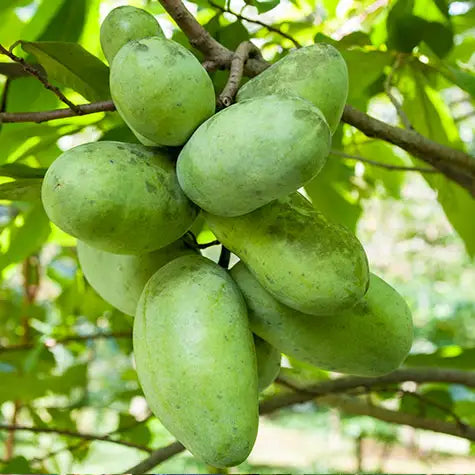
🌳 Pawpaw Tree (Asimina triloba)
America’s Native Tropical-Tasting Fruit Tree
The pawpaw is North America’s largest native fruit, produced by the beautiful understory tree Asimina triloba. With lush, tropical-looking leaves and custard-like fruit that tastes like a blend of banana, mango, and vanilla, pawpaws bring exotic flavor to temperate climates.
Unlike many tropical fruits, pawpaws are fully cold hardy and thrive right here in Arkansas.
🌿 Plant Characteristics
-
Botanical Name: Asimina triloba
-
Mature Height: 12–25 feet
-
Spread: 10–15 feet
-
Fruit Flavor: Banana-mango custard
-
Time to Fruit: 3–6 years (grafted trees fruit sooner)
-
Pollination: Requires cross-pollination (plant at least two different varieties)
-
Best For: Food forests, orchards, woodland edges
❄️ Cold Tolerance
Pawpaws are very hardy.
-
Hardy Zones: 5–8
-
Cold Tolerance: Down to approximately -20°F once established
-
Heat Tolerance: Handles Arkansas summers well with adequate moisture
For Zone 7 growers, pawpaws are extremely reliable and overwinter without protection once established.
🌱 Growing Indoors or in a Greenhouse (Young Trees)
While pawpaws are outdoor trees long term, young plants sometimes benefit from protection their first winter.
Light
-
Young pawpaws prefer partial shade.
-
In nature, they grow as understory trees.
-
Too much direct sun when young can scorch leaves.
Soil
-
Rich, well-draining soil high in organic matter.
-
Slightly acidic to neutral (pH 5.5–7).
Water
-
Consistent moisture is important.
-
Avoid drought stress, especially in the first 2–3 years.
If overwintering in a greenhouse:
-
Allow natural dormancy.
-
Keep soil barely moist.
-
Avoid warm indoor conditions that prevent dormancy.
📦 When Your Pawpaw Arrives (Acclimation Instructions)
Pawpaws are sensitive to transplant shock, especially young seedlings.
🌤 Step 1: Shade Rest (First 3 Days)
-
Keep in bright shade only.
-
Avoid direct sun.
-
Allow roots to settle and plant to recover from shipping.
🌿 Step 2: Gradual Light Increase
-
Introduce to filtered morning sun.
-
Slowly increase exposure over 7–10 days.
-
Young leaves burn easily in full sun.
🌳 Planting & Placement Tips
-
Choose a location with morning sun and afternoon shade when young.
-
Once mature, they tolerate more sun.
-
Plant at least two genetically different trees for pollination.
-
Space 10–15 feet apart.
🛡 Winter Protection (First Year Only)
In Zone 7:
-
Mulch heavily around the root zone (3–4 inches).
-
Protect from deer (they love tender growth).
-
Stake if in windy areas.
After the first year, pawpaws are very resilient.
🍈 Why Grow Pawpaws?
-
Native, hardy fruit tree
-
Unique tropical flavor in a temperate climate
-
Beautiful large ornamental leaves
-
Low pest pressure
-
Perfect for permaculture systems
Pawpaws are one of the most rewarding fruit trees for Arkansas growers — combining cold hardiness with a flavor you can’t find in grocery stores.