Yahuah's Farm
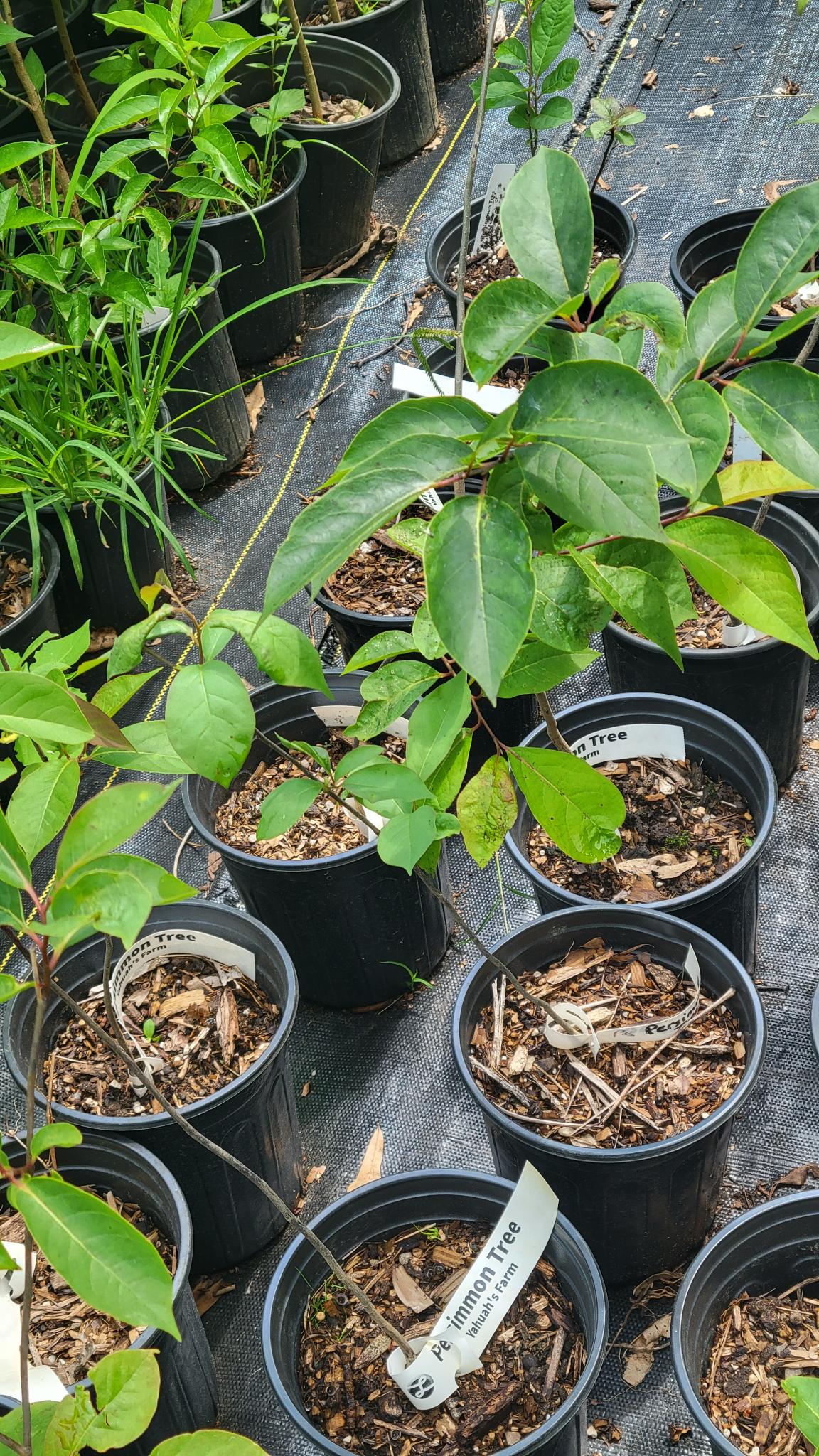
Persimmon Tree
Persimmon Tree
Couldn't load pickup availability
Persimmon Tree
Persimmon is a beautiful, long-lived fruiting tree known for its sweet orange fruit, strong wood, wildlife value, fall color, and usefulness in the homestead orchard. This is one of those trees that offers both beauty and food, making it a wonderful choice for edible landscaping, wildlife plantings, food forests, orchards, and long-term homestead production.
Persimmons are loved for their rich, honey-like sweetness when fully ripe. Depending on the variety, the fruit may be eaten fresh, dried, baked, cooked, frozen, or used in breads, cakes, cookies, puddings, jams, sauces, fruit leather, and other homemade foods. The fruit can also be an important fall and winter food source for deer, birds, possums, raccoons, and other wildlife.
This is not just a fruit tree. Persimmon is a legacy tree. Once established, it can become a dependable long-term food source for the family, wildlife, and future generations.
Edible Uses
Persimmon fruit is edible and highly valued when ripe. The fruit should be eaten only when it is fully ripe, especially with astringent types. An unripe astringent persimmon can make the mouth feel dry and puckered because of natural tannins. When fully ripe, the fruit becomes soft, sweet, rich, and flavorful.
Persimmons can be eaten fresh from the tree, dried like natural candy, blended into smoothies, cooked into sauces, baked into breads and cakes, made into jam, added to oatmeal, used in fruit leather, or frozen for later use.
American persimmons are often very sweet when fully soft and ripe. Asian persimmons may be either astringent or non-astringent depending on variety. Non-astringent types can often be eaten while still firm, while astringent types should be allowed to soften completely before eating.
Homestead and Practical Uses
Persimmon offers many uses around the farm and homestead.
It can be grown for edible fruit, wildlife food, deer attraction, fall and winter food production, shade, food forests, orchard plantings, pollinator support, native plantings, edible landscaping, long-term survival food, and legacy tree value.
Persimmon wood is also known for being very hard and strong. Historically, persimmon wood has been used for tool handles, golf club heads, turning, and other durable wood uses. While most people grow persimmon for fruit and wildlife, the tree itself is strong and valuable.
Persimmon is a great choice for those wanting a fruit tree that provides beauty, food, and wildlife support while also handling heat and variable soil conditions once established.
Pollination Note
Pollination depends on the type of persimmon and the variety being grown. Some persimmons can produce fruit without a male tree nearby, while others may need both male and female trees for fruit production.
American persimmons are often male or female, meaning female trees produce fruit and male trees provide pollen. For seedling American persimmons, planting more than one tree greatly increases the chance of getting both male and female plants and better fruit production.
Many grafted Asian persimmons and selected varieties are self-fertile or can produce fruit without another tree, but fruit set may still improve with another compatible persimmon nearby.
For best results, plant more than one persimmon tree when possible, especially if growing seedlings or wildlife persimmons.
How Your Tree Will Arrive
Your Persimmon tree may be shipped as a young tree, rooted seedling, bare-root tree, or dry-root tree depending on the season and shipping method. After traveling through the mail, it may look tired, wilted, trimmed back, dormant, or smaller than expected. This is normal for shipped trees.
If it arrives as a bare-root or dry-root tree, it may not look like a full green potted tree. Even if it looks like only a stem and roots, it is alive and needs to be planted. The life of the tree is in the roots, stem, and buds, and with proper care it can recover and begin growing.
When your Persimmon tree arrives, open the package right away. If the roots feel dry, soak only the roots in clean water for about 1 to 3 hours before planting. Do not soak the whole tree for days. The goal is only to rehydrate the roots before planting.
Until planted, keep the roots moist and keep the tree out of direct sun, strong wind, and extreme heat. Shipped trees should not be placed straight into hot afternoon sun when they first arrive.
If you cannot plant the same day, keep the roots wrapped in slightly damp paper towel, damp peat, or damp soil and place the tree somewhere cool, shaded, and protected for a short time. Plant as soon as possible for the best chance of success.
First Care After Shipping
After planting, protect your Persimmon tree from harsh direct sun, drying wind, and extreme heat for the first few days if possible. A newly shipped tree needs time to adjust after being in a box.
Keep the soil evenly moist while the tree establishes. Do not let the roots dry out during the first growing season. At the same time, do not keep the tree sitting in standing water.
Do not fertilize heavily right away. Let the roots settle first. Once new growth appears and the tree is actively growing, compost or a gentle natural fertilizer can be used if needed.
If leaves wilt, dry, or drop after shipping, do not panic. This can happen with shipped trees. Keep caring for the roots and stem. If the stem and buds are alive, the tree may push new growth when conditions are right.
Planting Instructions
Plant Persimmon in full sun for best fruit production. It can tolerate some part sun, but full sun usually gives stronger growth and better harvests.
Choose a location with well-draining soil. Persimmon can handle a range of soils once established, but young trees need good drainage and steady moisture while rooting in.
Dig a hole wide enough for the roots to spread naturally. Do not force the roots into a tight hole. Place the tree so the root crown is at soil level. Do not bury the trunk too deep. Gently backfill with soil and water deeply after planting.
Mulch around the base to help hold moisture, reduce weeds, and protect the soil. Keep mulch pulled back a few inches from the trunk so it does not stay wet against the bark.
Give the tree room to grow. Persimmons can become medium to large trees depending on the type and variety, so avoid planting too close to buildings, septic systems, power lines, or other trees.
Long-Term Care
Persimmon is a hardy, long-lived tree once established. During the first few years, water during dry spells to help the roots grow deep and strong. Deep watering is better than frequent shallow watering.
Keep grass and weeds pulled back from the base, especially while young. Mulch helps reduce competition and keeps the root zone protected.
Protect young trees from deer, rabbits, livestock, and mower damage. Tree tubes, cages, fencing, or trunk guards may be helpful, especially in areas with heavy wildlife pressure.
Persimmon does not need heavy fertilizing. Too much nitrogen can cause leafy growth at the expense of fruiting and may make the tree more tender. Compost, mulch, and healthy soil are usually better than strong fertilizer.
Prune only as needed to remove damaged, crossing, weak, or poorly placed branches. Persimmons can be slow to recover from heavy pruning, so light shaping is usually best.
Cold Hardiness
Cold hardiness depends on the type of persimmon. American persimmon is very cold hardy and well suited for many regions. Asian persimmons vary by variety, with some being better suited for Zone 7 than others.
In Zone 7, many persimmons can grow well when planted in the right location. Young trees may benefit from mulch and protection during their first winter, especially after shipping and transplanting.
In winter, persimmon trees go dormant and drop their leaves. This is normal. The roots, trunk, and buds remain alive, and new growth returns in spring.
Fruit Production and Harvest
Persimmon trees usually take a few years to begin producing fruit. Young trees should be allowed to focus on root and branch growth before expecting heavy harvests.
Fruit usually ripens in fall. Astringent persimmons should be left to soften fully before eating. They may become very soft, almost jelly-like, when ripe. Non-astringent types can often be eaten while firm, depending on variety.
Persimmons may be harvested when fully colored and allowed to finish ripening indoors, or left on the tree until soft if wildlife pressure is not too heavy.
Best Uses
Persimmon is excellent for homestead orchards, wildlife plantings, deer plots, food forests, edible landscaping, fall fruit production, native plantings, long-term survival food, shade, and legacy tree plantings.
It is especially useful for growers who want a beautiful fruiting tree that can feed people and wildlife while becoming more valuable with age.
Care Summary
Plant in full sun with well-draining soil. Protect from harsh direct sun and drying wind for the first few days after shipping. Keep roots moist while establishing, but do not keep the soil waterlogged. Remember, even if it arrives looking like only a stem and roots, it is alive and needs to be planted. Plant more than one persimmon when possible, especially with seedlings or American persimmons, for better pollination and fruit production. Mulch well, water during dry spells, protect young trees from animals, and allow time for the tree to mature into a productive fruit-bearing tree.
Share