Yahuah's Farm
Block #14 Comfrey
Block #14 Comfrey
Couldn't load pickup availability
Block #14 Comfrey Live Plant
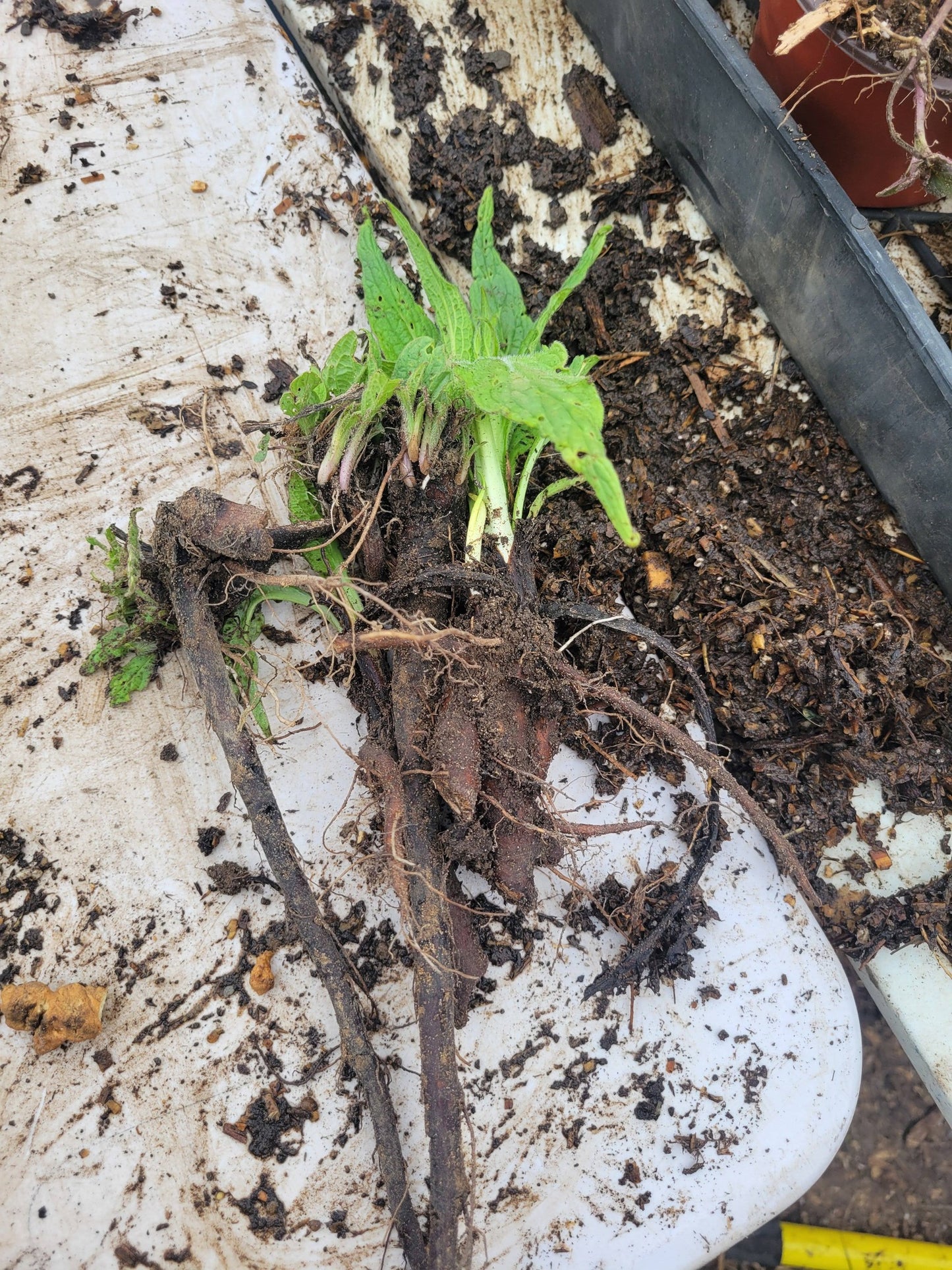
Block #14 Comfrey is one of the most useful perennial plants a homestead can grow. It is a strong, deep-rooted plant known for its large leaves, fast growth, beautiful flowers, and many practical uses in the garden, orchard, compost pile, and traditional herbal world. Once established, Block #14 Comfrey can return year after year and become a long-term workhorse plant for the homestead.
Block #14 Comfrey is especially valued because it is commonly grown as a high-biomass comfrey type. That means it can produce large amounts of leafy growth that can be cut and used to feed the soil, mulch plants, build compost, and support natural fertility around the garden and orchard.
Comfrey is often called a “dynamic accumulator” because it grows a deep root system that helps pull minerals from deeper in the soil. The leaves can be cut and used as mulch, compost material, fertilizer tea, chop-and-drop plant food, and garden biomass. This makes Block #14 Comfrey especially valuable around fruit trees, berry bushes, garden beds, compost areas, and permaculture-style plantings.
This is not just a plant for looks. Block #14 Comfrey is a practical survival and homestead plant. It builds soil, feeds compost, supports pollinators, produces large amounts of green material, and has a long history of traditional external use.
Important Note About Block #14 Comfrey
Block #14 Comfrey is different from common comfrey. It is commonly grown because it is considered a sterile or very low-seed comfrey type, meaning it is not known for spreading aggressively by viable seed like common comfrey can. This makes it a better choice for growers who want the benefits of comfrey without as much concern about it reseeding everywhere.
However, Block #14 Comfrey can still regrow from root pieces if the roots are cut, chopped, tilled, or disturbed. Because of this, it should still be planted in a permanent location where you want it to stay long-term.
This variety is excellent for orchards, food forests, compost areas, fruit tree guilds, berry rows, and dedicated garden fertility patches.
Traditional and Homestead Uses
Block #14 Comfrey has been traditionally valued for external herbal use, especially in salves, poultices, infused oils, and skin-supporting preparations. It has been used historically for skin, joints, muscles, bruises, sprains, and general external comfort. Because of its traditional reputation, many people have called comfrey “knitbone.”
In the garden, comfrey is one of the best plants for making natural fertilizer. The leaves break down quickly and can be placed around fruit trees, berries, tomatoes, peppers, perennials, and heavy-feeding plants. They can also be added to compost piles to increase green material.
Block #14 Comfrey flowers are loved by bees and other pollinators. When in bloom, the plant brings beauty and life to the garden while still serving a very practical purpose.
Safety Note
Comfrey should be respected as a strong herb. It is generally best used externally and as a garden plant. Internal use is controversial because comfrey contains natural compounds called pyrrolizidine alkaloids, which can be harmful to the liver if misused. Because of this, we do not recommend internal use.
At Yahuah’s Farm, we value Block #14 Comfrey mainly as a live garden plant, soil-building plant, compost plant, pollinator plant, orchard companion, and traditional external-use herb.
How Your Plant Will Arrive
Your Block #14 Comfrey will be shipped as a live plant. After traveling through the mail, it may look tired, wilted, trimmed back, or smaller than expected. This is normal for shipped plants.
Comfrey is a very tough plant. Even if the leaves look rough from shipping, the life of the plant is in the crown and roots. Do not throw it away if the top growth looks stressed. Plant it, water it, and give it time to recover.
When your plant arrives, open the package right away. Remove it gently from the packaging and check the root area. If the roots or soil feel dry, water the plant well before planting.
Until planted, keep the plant in shade or bright indirect light. Do not place a newly shipped Block #14 Comfrey plant straight into hot direct sun, strong wind, or extreme heat. Shipping stresses plants, and they need a short recovery period before being exposed to full outdoor conditions.
If you cannot plant the same day, keep the plant lightly moist and shaded until planting.
First Care After Shipping
After planting, keep your Block #14 Comfrey in shade, bright indirect light, or gentle morning sun for the first few days. Do not place a newly shipped plant directly into harsh afternoon sun right away. Let it adjust first.
Keep the soil evenly moist while the plant settles in. Comfrey likes moisture while establishing, but it should not sit in standing water.
Do not fertilize heavily right away. Let the roots settle and begin growing first. Once new growth appears, compost or a gentle natural fertilizer can be used if needed.
If the leaves wilt or die back after shipping, cut off the damaged leaves and keep caring for the roots. Block #14 Comfrey can regrow from the crown and root system.
Planting Instructions
Plant Block #14 Comfrey in full sun to part sun. Full sun gives the strongest growth, but it can also grow in partial shade.
Choose a location carefully. Block #14 Comfrey is a perennial and can be difficult to remove once established because pieces of root can regrow. Plant it where you want it to stay long-term.
Comfrey grows best in rich, moist, well-draining soil, but it is also tough enough to handle average garden soil once established. Mix compost into the planting hole if your soil is poor.
Dig a hole wide enough for the roots. Place the plant at the same depth it was growing before, then gently backfill with soil. Water deeply after planting to help settle the soil around the roots.
Mulch around the base of the plant to help hold moisture, reduce weeds, and protect the root zone. Keep mulch pulled back slightly from the crown.
Long-Term Care
Block #14 Comfrey is a hardy, fast-growing perennial once established. It grows best with moisture, sun, and fertile soil, but it can handle less-than-perfect conditions.
Water during dry spells, especially during the first year. Once established, comfrey’s deep roots help it become tougher and more resilient.
Comfrey can be cut several times during the growing season. Cut the leaves back and use them as mulch, compost material, or fertilizer tea. The plant will usually regrow quickly after cutting.
To make chop-and-drop mulch, simply cut the leaves and lay them around fruit trees, berry bushes, garden beds, or compost areas. The leaves break down and return nutrients to the soil.
Because Block #14 Comfrey is not known for spreading by seed like common comfrey, it is often easier to manage. However, avoid tilling, chopping, or disturbing the roots unless you want more plants, because root pieces can regrow.
Cold Hardiness
Block #14 Comfrey is a cold-hardy perennial and grows well in many climates. It is well suited for Zone 7 and should return year after year once established.
In winter, the top growth may die back to the ground. This is normal. The roots remain alive underground, and the plant returns in spring.
A layer of mulch can help protect young plants during their first winter and improve the soil over time.
Harvesting
Harvest Block #14 Comfrey leaves once the plant is established and growing strongly. Do not overharvest a young plant before it has built a good root system.
The leaves can be cut and used fresh in compost, mulch, fertilizer tea, or external herbal preparations. For garden use, fresh leaves are often best because they break down quickly and feed the soil.
For drying, harvest healthy leaves, spread them in a warm shaded area with good airflow, and dry completely before storing.
Best Uses
Block #14 Comfrey is excellent for orchards, fruit trees, berry rows, compost systems, medicinal gardens, pollinator gardens, permaculture plantings, homesteads, and survival gardens. It is one of the best plants for people who want to grow their own fertilizer and build soil naturally.
It is useful as chop-and-drop mulch, compost material, fertilizer tea, pollinator support, biomass production, orchard companion planting, and traditional external herbal use.
Care Summary
Plant in full sun to part sun. Use rich, moist, well-draining soil when possible. Protect from harsh direct sun for the first few days after shipping. Keep evenly moist while establishing. Remember, even if the leaves look wilted or rough from shipping, the crown and roots are alive and need to be planted. Block #14 Comfrey is a strong perennial that returns year after year, builds soil, feeds compost, supports pollinators, and becomes one of the most useful plants on the homestead. Plant it in a permanent location, because it can regrow from root pieces if disturbed.
Share