Yahuah's Farm
Butterfly Weed — Live Plant
Butterfly Weed — Live Plant
Couldn't load pickup availability
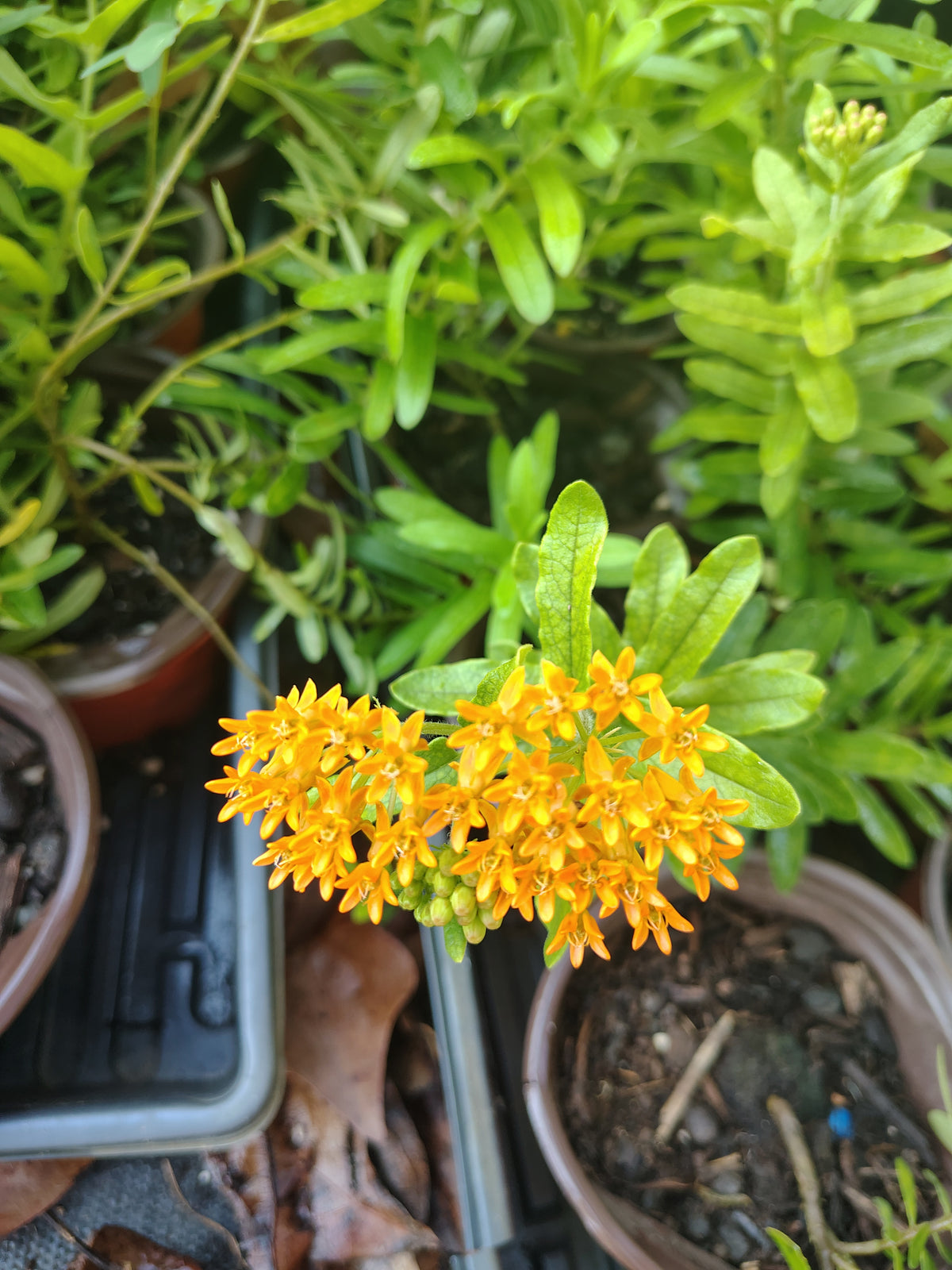
🦋 Butterfly Weed (Asclepias tuberosa) — Live Plant
Native perennial. Brilliant orange flowers. Monarch host plant.
Botanical Name: Asclepias tuberosa
Butterfly Weed is a beautiful North American native perennial in the milkweed family. It is especially valued for its brilliant clusters of orange flowers and its importance to butterflies and other pollinators.
🌿 Plant at a Glance
- Type: North American native perennial
- USDA Growing Zones: 3–9
- Flowers: Bright orange clusters, late spring through summer
- Mature Size: Approximately 1–3 feet tall and 1–2 feet wide
- Sun: Full sun (6+ hours of direct sunlight)
- Soil: Well-draining; sandy, rocky and poor soils tolerated
- Water: Regular while establishing; drought tolerant once established
- Root: Substantial taproot
- Monarch Host Plant: Yes
🦋 Monarch Host Plant & Pollinator Value
Butterfly Weed is a host plant for monarch butterfly caterpillars. Monarchs use plants in the milkweed genus, Asclepias, as host plants for their larvae. The flowers also provide nectar for numerous butterflies, bees and other pollinating insects.
Unlike some other milkweeds, Butterfly Weed generally grows as a well-behaved clumping perennial rather than spreading aggressively through underground runners.
It is an excellent addition to native gardens, butterfly gardens, pollinator gardens, prairie-style plantings and naturalized landscapes. Avoid applying insecticides to plants intended to support monarch caterpillars or other beneficial insects.
🧡 Flowers
Butterfly Weed produces striking clusters of primarily bright orange flowers, usually during late spring and summer depending on climate and location. Established plants can produce an impressive display of flowers above their narrow green foliage.
After flowering, plants can develop elongated seed pods containing the characteristic milkweed seeds attached to silky fibers.
🌎 USDA GROWING ZONES
Generally suitable for USDA Zones 3–9.
Because it is a perennial, the above-ground portion naturally dies back during winter in colder climates and returns from its established root system in spring.
📏 Mature Size
Approximately 1–3 feet tall and roughly 1–2 feet wide under typical garden conditions.
🌱 Growing Requirements
☀ Sun: FULL SUN is preferred. For the strongest growth and flowering, provide at least 6 hours of direct sunlight per day. Plants grown in insufficient sunlight may become weaker and produce fewer flowers.
🌱 Soil: Butterfly Weed prefers well-draining soil and is especially well suited to relatively dry sites once established. It can tolerate sandy, rocky and relatively poor soils better than many traditional garden plants. GOOD DRAINAGE IS VERY IMPORTANT. Do not intentionally keep the root system constantly wet or plant it in a location that remains waterlogged.
💧 Water: Water regularly while a newly planted Butterfly Weed establishes its root system. Once established, it is relatively drought tolerant. Avoid excessive watering. Allow the soil to begin drying between waterings rather than keeping it continuously saturated.
⚠️ IMPORTANT ROOT INFORMATION
Butterfly Weed develops a substantial taproot.
Because of this taproot, choose its permanent planting location carefully. Established Butterfly Weed generally does not appreciate repeated transplanting. Handle the root system gently when planting and avoid unnecessarily disturbing or breaking the roots.
📦 WHEN YOUR LIVE PLANT ARRIVES
Your Butterfly Weed has just spent several days traveling inside a dark shipping box.
DO NOT take the plant directly out of the shipping box and immediately place it into full sun.
Even though established Butterfly Weed LOVES full sun, leaves that have spent several days inside a dark shipping box can be damaged when suddenly exposed to intense sunlight.
Day 1
- Immediately unpack your plant and remove the shipping material.
- Inspect the plant and check the soil.
- If the soil is dry, water thoroughly and allow all excess water to drain.
- Place the plant OUTDOORS in a protected location with bright shade and good airflow.
- Do not place it in intense afternoon sun.
Days 2–3
- Continue keeping the plant in bright shade or gentle filtered sunlight.
- Check the soil moisture each day.
- Water when needed, but do not keep the soil constantly saturated.
After Approximately 3 Days
- Begin gradually introducing the plant to direct sunlight.
- Start with gentle morning sunlight and gradually increase the amount of direct sun over several days.
- Once acclimated, Butterfly Weed should be grown in full sun.
IMPORTANT: Do not confuse shipping acclimation with the plant's permanent sunlight requirements. The temporary shade is ONLY to allow a shipped plant to recover and adjust. Once acclimated, Butterfly Weed prefers FULL SUN.
🌳 HOW TO PLANT
After the plant has recovered from shipping and has gradually acclimated to outdoor sunlight, choose a permanent location with full sun and excellent drainage.
- Dig a planting hole approximately as deep as the root ball and wide enough to comfortably accommodate it.
- Remove the plant carefully from its nursery container.
- DO NOT aggressively tear apart or disturb the root system.
- Position the plant so that it remains approximately at the same soil level at which it was growing in its nursery container.
- Backfill around the roots and gently firm the soil.
- Water thoroughly after planting.
- Do not bury the crown excessively deep.
- Do not place the plant in an area where water regularly stands after rain.
🌿 ONGOING CARE
Sun: Full sun.
Water: Provide regular water during establishment. Once established, Butterfly Weed becomes considerably more drought tolerant.
Soil: Well-drained soil is essential. Avoid continuously wet locations.
Fertilizer: Butterfly Weed generally does not require heavy fertilization. Excessive fertilizer can encourage unnecessary leafy growth.
Pruning: Dead or damaged growth can be removed as needed. In climates where the plant becomes dormant, old growth can be cut back after it has naturally died back.
Winter: Butterfly Weed is a herbaceous perennial. In colder areas, the foliage and stems can completely disappear during winter. This does NOT necessarily mean the plant is dead. An established root system can remain dormant underground and produce new growth when conditions warm in spring.
🍂 DORMANCY & WHAT TO EXPECT
Because Butterfly Weed is a perennial, plants shipped during dormancy or near the beginning or end of the growing season may look very different from plants shipped during active summer growth.
Not every plant will arrive flowering or covered with foliage. Flowering depends on the plant's maturity, season, climate and growing conditions.
Share