Yahuah's Farm
Purple Glazer Hardneck
Purple Glazer Hardneck
Couldn't load pickup availability
PURPLE GLAZER GARLIC — AMISH GROWN
$22 PER POUND
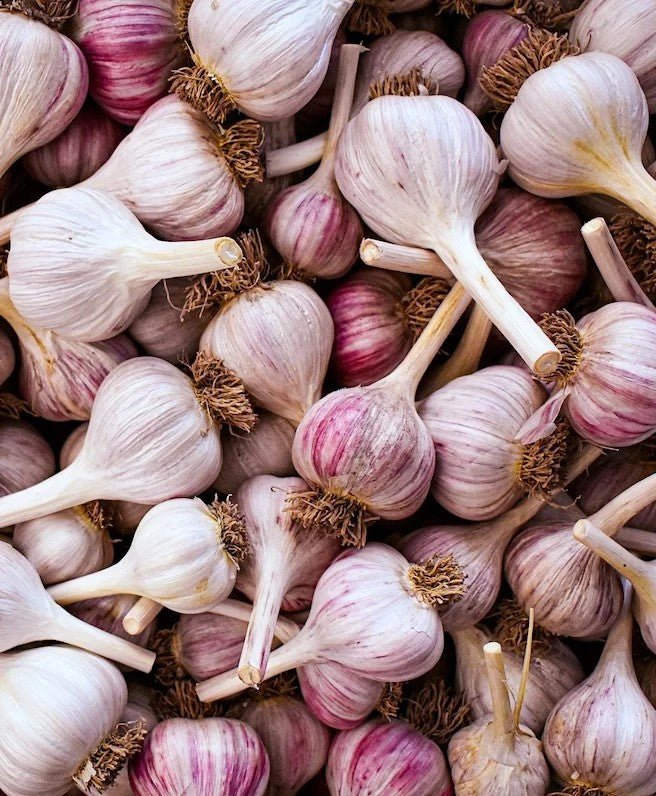
Purple Glazer is a beautiful hardneck garlic prized for its striking purple-striped wrappers, large cloves, dependable growth, and exceptional flavor. Our Purple Glazer Garlic is grown by Amish growers and can be used for planting, cooking, roasting, baking, and saving as seed garlic for future harvests.
Purple Glazer belongs to the Glazed Purple Stripe family of hardneck garlic. It produces attractive white bulbs brushed and streaked with deep purple, burgundy, and silvery tones. Beneath the outer wrappers are large, elongated, easy-to-peel cloves surrounding a firm central stalk. This variety also produces edible garlic scapes in late spring.
Purple Glazer has a rich, full garlic flavor with a mild sweetness and very little lingering heat or bitter aftertaste. When eaten raw, it offers a clean, flavorful garlic bite without being overwhelming. When cooked, it becomes sweet, smooth, and almost creamy, sometimes developing a mild leek-like flavor. It is considered an outstanding garlic for roasting and baking, but it is equally good in garlic butter, soups, stews, sauces, pesto, hummus, marinades, and everyday cooking.
WHAT YOU RECEIVE
Purple Glazer normally produces approximately 6–10 large cloves per bulb. One pound generally contains approximately 6–8 bulbs and about 50–65 plantable cloves. Because garlic is a natural product sold by weight, the exact number of bulbs and cloves will vary according to bulb size.
Each healthy clove can be planted to produce one complete bulb. Under proper growing conditions, one pound of Purple Glazer may plant approximately 50–65 garlic plants.
HOW TO PLANT
Plant Purple Glazer in the fall, approximately three to four weeks before the ground normally freezes. In Zone 7, this is generally October through November, depending on local weather. Fall planting gives the cloves time to establish roots before winter and allows the cold weather needed for proper bulb formation.
Wait until shortly before planting to separate the bulbs into individual cloves. Leave the papery clove wrappers intact. Plant the largest, healthiest cloves and use any undersized or damaged cloves in the kitchen.
Place each clove with the pointed end facing upward and the flat root plate facing downward. Plant approximately 2–3 inches deep and 5–6 inches apart. Space rows approximately 12–18 inches apart. Cover the planting bed with 3–4 inches of clean straw, chopped leaves, or another loose mulch to protect the soil, conserve moisture, and reduce weeds.
SOIL AND SUNLIGHT
Choose a location receiving at least 6–8 hours of direct sunlight each day. Garlic grows best in loose, fertile, well-drained soil with plenty of organic matter and a soil pH of approximately 6.0–7.0.
Heavy or waterlogged soil can cause cloves to rot or produce undersized bulbs. Compost or well-rotted manure may be worked into the bed before planting, but avoid fresh manure directly around the cloves.
HOW TO GROW
Keep the bed free of weeds because garlic does not compete well with heavy weed growth. Maintain even soil moisture during active spring growth, providing approximately one inch of water per week when rainfall is insufficient. Avoid constantly saturated soil.
Purple Glazer is a hardneck garlic and will produce a curling flower stalk called a scape. Cut the scape after it curls to encourage the plant to send more energy into forming a larger bulb. Garlic scapes are edible and have a delicious, mild garlic flavor.
Garlic benefits from nitrogen during early spring growth, but heavy feeding should be stopped once the bulbs begin forming. Reduce watering as the plants approach maturity and stop watering approximately two weeks before harvest.
HOW TO HARVEST
Purple Glazer is generally ready to harvest in early to midsummer. Watch the leaves rather than relying only on the calendar. Harvest when the lower four or five leaves have turned brown and dried while several upper leaves are still green.
Do not wait until every leaf is brown. Purple Glazer has relatively delicate wrappers, and leaving mature bulbs in wet soil too long may cause the wrappers to split.
Loosen the soil carefully with a garden fork or shovel and lift the bulbs from underneath. Do not pull the bulbs forcefully by their stalks. Gently brush away loose soil, but do not wash the freshly harvested garlic before curing.
CURING AND STORAGE
Place the whole plants in a warm, dry, shaded location with good air circulation. Keep them out of direct sunlight and allow them to cure for approximately two to three weeks.
After curing, trim the roots and cut the hard stem approximately one inch above the bulb. Store the bulbs in a cool, dry, well-ventilated location. Do not store whole garlic bulbs in sealed plastic bags or other containers that trap moisture. Properly cured Purple Glazer generally stores for approximately four to six months.
QUICK GROWING INFORMATION
Type: Hardneck Garlic
Family: Glazed Purple Stripe
Botanical Name: Allium sativum ‘Purple Glazer’
Planting Season: Fall
Sunlight: Full sun
Planting Depth: 2–3 inches
Plant Spacing: 5–6 inches
Row Spacing: 12–18 inches
Cloves Per Bulb: Approximately 6–10
Bulbs Per Pound: Approximately 6–8
Cloves Per Pound: Approximately 50–65
Harvest Season: Early to midsummer
Storage: Approximately 4–6 months when properly cured
Price: $22 per pound
Purple Glazer is an excellent choice for gardeners who want a dependable hardneck garlic with beautiful color, large cloves, edible scapes, and a rich flavor that becomes wonderfully sweet and creamy when roasted.
Share