Yahuah's Farm
LSU Purple Fig — Live Plant
LSU Purple Fig — Live Plant
Couldn't load pickup availability
🌿 LSU Purple Fig (Ficus carica ‘LSU Purple’) — Live Plant
Sweet, strawberry-fleshed fruit. Early producer. Bred for the warm South.
Botanical Name: Ficus carica
Variety: LSU Purple
Please note: LSU Purple is NOT the same fig as LSU Tiger.
🌎 USDA GROWING ZONES
Approximately Zones 7–10, with winter protection recommended toward the colder end of the range.
- Zones 8–10: Generally well suited for in-ground cultivation.
- Zone 7: Can be grown in favorable locations, although winter protection is recommended, particularly for young plants.
- Zone 6 and colder: Container culture with winter protection is generally the safer option because severe cold can damage or kill above-ground growth.
LSU Purple was developed for the warm, humid conditions of the southeastern United States. It is productive in warm climates but is not one of the most cold-hardy fig varieties. Customers in colder areas can grow LSU Purple in a large container and move the dormant plant into an appropriate protected location during the coldest part of winter.
🍈 About This Fig
LSU Purple was developed through Louisiana State University's fig breeding program and released by the Louisiana Agricultural Experiment Station.
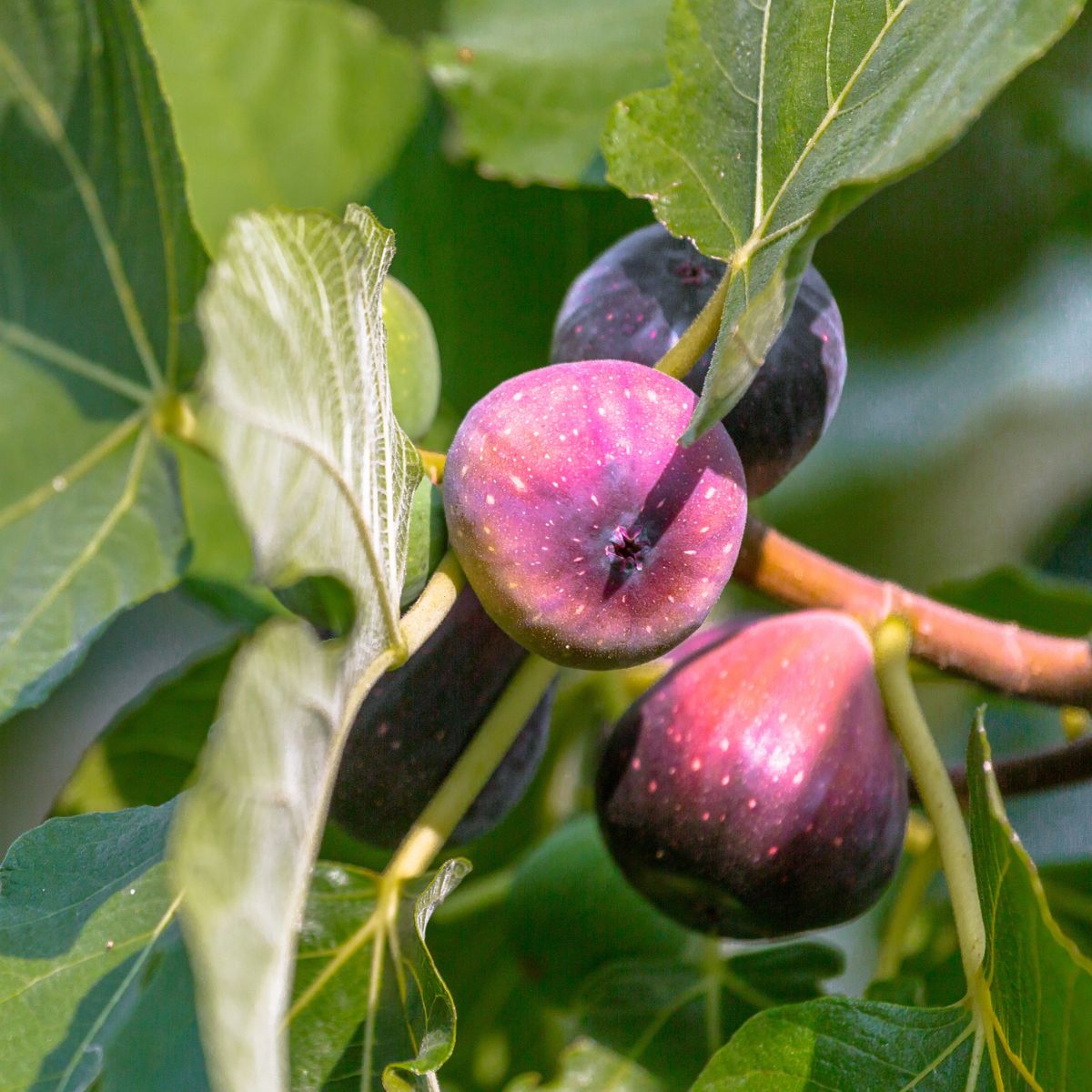
It produces attractive medium-sized fruit that develops reddish-purple to dark-purple skin with light strawberry-colored flesh.
LSU Purple is also known for being capable of beginning production while relatively young. As the plant matures and becomes established, production and fruit quality can improve considerably. In climates with sufficiently long growing seasons, established plants can potentially produce fruit over an extended period.
😋 Flavor
LSU Purple produces sweet fruit with light strawberry-colored pulp. Fully ripe fruit can develop excellent sweetness and is particularly enjoyable for fresh eating.
🌱 Growing Requirements
☀ Sun: Plant in full sun. Provide at least 6 hours of direct sunlight, with additional sunlight beneficial for fruit production and ripening.
🌱 Soil: Plant in fertile, well-drained soil. Mulching around the root zone can help maintain more consistent soil moisture.
💧 Water: Water regularly while establishing the plant. Avoid severe drought stress during fruit development, but never intentionally keep the roots waterlogged.
🪴 Containers: LSU Purple can be maintained in a large container. Make sure the container drains freely. Container-grown figs generally dry considerably faster during hot summer weather.
📦 WHEN YOUR FIG TREE ARRIVES
Your fig tree has just spent several days traveling inside a dark shipping box.
DO NOT immediately take the plant out of the shipping box and place it into full sun.
Even though established fig trees love sunlight, leaves that have spent several days inside a shipping box need time to readjust to intense outdoor sunlight. Moving a shipped plant immediately into strong direct sun can cause unnecessary stress and leaf burn.
Day 1
- Unpack your plant immediately.
- Remove the shipping materials and inspect the plant.
- Check the soil moisture. If the soil is dry, water thoroughly and allow excess water to drain.
- Place the plant OUTDOORS in a protected location with bright shade and no intense afternoon sunlight.
Days 2–3
- Keep the plant in bright shade or gentle filtered light.
- Check the soil moisture daily, but do not keep the pot constantly soaked.
After Approximately 3 Days
- Begin gradually introducing your fig to direct sunlight.
- Start with gentle morning sunlight and gradually increase the amount of direct sunlight it receives over the following several days.
DO NOT take a newly shipped fig directly from the shipping box and place it into full all-day sunlight.
🌳 HOW TO PLANT YOUR FIG
After your fig has recovered from shipping and has been gradually acclimated to outdoor sunlight, it can be planted.
- Choose a location receiving full sun with excellent drainage.
- Dig a hole wide enough to comfortably accommodate the root system.
- Plant at approximately the same soil level at which the plant was growing in its container unless there is a specific horticultural reason to plant otherwise.
- Backfill the soil and water thoroughly to settle the soil around the roots.
- Mulch around the root zone to conserve moisture and moderate soil temperatures, but DO NOT pile mulch against the trunk.
- Keep the newly planted fig consistently watered while its root system becomes established.
- Avoid excessive fertilizer, particularly excessive nitrogen, because it can encourage vigorous leafy growth instead of fruit production.
🌿 FIG TREE CARE
Sun: Once acclimated, figs perform best in full sun.
Water: Water deeply and thoroughly rather than constantly applying tiny amounts of water. Newly planted trees require additional attention until established. Do not allow the root system to remain constantly saturated.
Drainage: Excellent drainage is important. Figs should not be planted in locations that remain waterlogged.
Mulch: Organic mulch can help conserve moisture and moderate soil temperature. Keep mulch away from direct contact with the trunk.
Pruning: Figs can be maintained as either branching trees or multi-stemmed bushes. Remove dead, damaged or crossing growth and prune as needed to control the desired size and shape.
Container Growing: Figs adapt well to containers. Use a sufficiently large container with excellent drainage. Container-grown plants require closer attention to watering and winter temperatures.
Winter: Cold tolerance varies considerably among fig cultivars. In colder areas, winter protection may be necessary.
❄️ USDA ZONE & WINTER-HARDINESS NOTICE
USDA growing zones are guidelines rather than guarantees of winter survival.
Fig survival can be affected by the age and establishment of the plant, duration of cold temperatures, sudden temperature changes, wind exposure, soil moisture, microclimate and winter protection.
The roots of an established fig may survive temperatures that damage or kill some or all of its above-ground growth.
Gardeners near or beyond the colder limits of a variety can improve their chances by selecting a protected microclimate, mulching, providing winter protection, maintaining the plant as a multi-stemmed bush, or growing it in a container that can be protected during severe winter weather.
Young and newly planted figs generally require greater winter protection than mature, established plants.
Share